The problem compounds quietly. Carriers adjust fuel indices weekly, expand delivery area surcharge zones mid-year, and introduce new fee categories without renegotiating your contract. What a shipment cost last quarter may cost measurably more today — with no obvious explanation on the invoice.
This article breaks down how hidden parcel fees accumulate, which cost drivers generate the most exposure, and — critically — which cost-reduction strategies apply at each layer of the problem: the decisions made before shipment, the management practices applied during operations, and the structural conditions that set the cost ceiling.
Key Takeaways
- Surcharges and accessorial fees can consume 30–40% of total parcel invoices
- Costs compound through carrier policy changes, zone reclassifications, and mid-year fee introductions
- Reducing parcel spend means targeting the right layer: pre-shipment decisions, operational management, or structural conditions
- Invoice auditing, packaging optimization, service level discipline, and data-driven contract negotiation deliver the highest returns
- Businesses that manage parcel spend proactively — with data, not guesswork — consistently recover more margin
How Hidden Shipping Fees Typically Build Up
Parcel spend inefficiencies rarely trace back to one large, visible cost. They accumulate through dozens of small charges applied across high shipment volumes — minor on their own, but collectively significant and nearly impossible to track without dedicated tooling.
The build-up is gradual and compounding. Carriers adjust fuel indices weekly based on government-published energy price data. Delivery area surcharge (DAS) zone lists expand annually, sometimes dramatically: in April 2024, UPS and FedEx added 82 ZIP codes to DAS lists affecting Boston, Chicago, and Los Angeles. FedEx added 136 more ZIP codes across 20 states in June 2025. Neither change required a contract renegotiation to take effect.
Peak surcharge windows have also expanded. UPS demand surcharges for the 2025–2026 season run from September 28 through January 17 (nearly five months of the year), with per-package fees reaching $7.50 to $8.75 for high-volume residential shippers at peak volume thresholds.
Many of these fees remain invisible not because they're undisclosed, but because they're buried in lengthy invoices, coded in abbreviations, or spread across multiple line items. Major carriers maintain over 100 distinct surcharge categories, and each shipment can trigger dozens of individual charges.
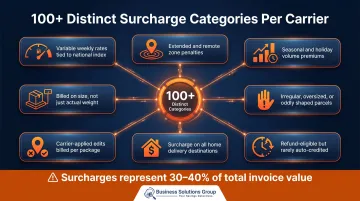
The dispute window for billing errors is typically 15–30 days depending on the carrier. Most businesses miss it entirely.
By the time a business notices the pattern, months of overcharges have already compounded into a meaningful budget problem.
Key Cost Drivers Behind Parcel Spend Inefficiencies
Base rates get the attention during contract negotiations. The real cost exposure sits in the accessorial layer.
Dimensional Weight Pricing
Both UPS and FedEx calculate dimensional (DIM) weight using the formula: (L × W × H) ÷ 139. The carrier bills whichever is greater — actual weight or DIM weight. Effective August 18, 2025, both carriers began rounding each fractional dimension up to the next whole inch before calculating, which increases billed DIM weight on nearly every non-integer measurement.
A box that's 10.1 × 10.1 × 10.1 inches now bills as 11 × 11 × 11. That's not a minor rounding adjustment — at volume, it's a systematic cost increase.
Delivery Area Surcharges
DAS fees apply to shipments going to rural, suburban, and — increasingly — urban ZIP codes. Current rates for FedEx and UPS range from $4.35 to $16.50 for contiguous U.S. deliveries, reaching $46.25 for UPS remote Alaska shipments. These fees increased approximately 7.5% across most service tiers in 2025, with UPS Ground Saver DAS spiking more than 62% effective January 2025.
The exposure depends heavily on where your customers are located. Businesses with residential or rural-heavy delivery profiles carry disproportionate DAS risk.
Fuel Surcharges and the Compounding Problem
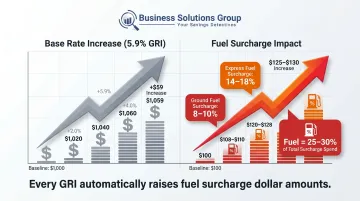
Unlike DAS, fuel surcharges aren't geography-driven — they're applied as a percentage of the base rate. That structure creates a compounding effect: every general rate increase (GRI) automatically inflates fuel surcharge costs, even when energy prices stay flat.
UPS and FedEx both implemented a 5.9% average GRI for 2025, which pushed fuel surcharge dollar amounts higher regardless of actual fuel market conditions. Ground fuel surcharges currently run approximately 8–10% of the base rate; Express runs 14–18%. Across total surcharge spend, fuel typically accounts for 25–30% — making it the single largest surcharge category.
Additional Handling and Other Accessorials
Additional handling fees trigger when a package exceeds any of these thresholds:
- Actual weight over 50 lbs
- Longest side over 48 inches
- Second-longest side over 30 inches
UPS fees range from $22.25 to $58.75 depending on zone and effective date. These fees compound with DAS and fuel surcharges on the same shipment — so a heavy package going to a rural ZIP code can accumulate three separate surcharges before it moves.
Address correction fees — triggered when submitted address data doesn't match carrier records — run $23.50 to $25.25 per package for UPS, with a maximum of $175.25 per shipment.
Cost-Reduction Strategies for Parcel Spend Inefficiencies
The right approach depends on where the inefficiency originates. Some costs are best addressed before a shipment is created. Others require ongoing management. And some require changing the structural context — carrier relationships, network design, and market positioning — that determines cost conditions in the first place.
Strategies That Reduce Costs by Changing Decisions
These approaches address cost exposure at the point where it's created: before the carrier picks up the package.
Right-size packaging to eliminate DIM weight charges. Using an oversized box for a lightweight item triggers DIM weight billing based on volume, not actual weight. Standardizing box sizes to match product dimensions — or implementing packaging selection logic in your fulfillment process — eliminates this recurring cost at the source. Business Solutions Group includes DIM weight and packaging optimization as part of its freight and fulfillment cost reduction services.
Match service level to delivery urgency. Defaulting to next-day or express shipping for non-time-sensitive orders is one of the most common forms of parcel overspend. Establishing clear internal criteria for when premium service is justified — versus when ground delivery is sufficient — produces immediate per-shipment savings with no operational disruption.
Consolidate shipments before they leave the facility. Shipping multiple packages to the same destination separately multiplies per-package charges and accessorial exposure unnecessarily. Reviewing order fulfillment logic to identify consolidation opportunities reduces shipment count and cuts the base for surcharge accumulation.
Build a spend baseline before contract negotiations. Businesses that enter carrier contract discussions without detailed data on their own shipping profile — volume by zone, service mix, surcharge breakdown — consistently accept terms that don't reflect their actual cost drivers. Business Solutions Group's pre-negotiation process runs a full analysis of parcel invoice data against proprietary market-rate intelligence, typically completed within one week, before any agreement is signed.
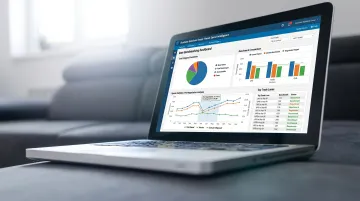
Their spend intelligence software benchmarks optimal rate structures down to 1/10th of a percent — giving clients precise leverage, not general estimates.
Strategies That Close the Gap Between Agreed and Actual Costs
These approaches close the gap between what businesses agree to pay and what they actually get billed.
Audit carrier invoices on a recurring basis. Carrier billing errors affect between 1% and 10% of all shipping invoices, according to Sifted's analysis of carrier billing practices. Common errors include incorrect DIM divisor application, misassigned DAS zones, peak fees charged outside published date windows, and negotiated discounts that weren't applied.
Parcel audit programs typically recover 1–5% of total shipping spend. The dispute window is narrow — 15 days for FedEx, roughly 30 days for UPS — so recurring audits need to run continuously, not periodically.
Business Solutions Group provides carrier invoice auditing as a continuous managed service, with automated validation against contract terms and monthly reporting on corrections, credits, and trends. Their compensation model is performance-based — clients pay a share of what's recovered, with no upfront cost.
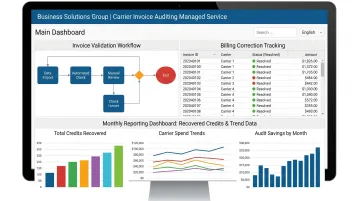
Monitor accessorial fees as a dedicated spend category. Treating accessorial charges as a catch-all "other shipping costs" line item makes it impossible to identify which fee types are growing, which are misapplied, and which are negotiable. Tracking accessorials as a distinct budget category — by fee type and carrier — creates the visibility needed to dispute invalid charges and systematically reduce their frequency. Business Solutions Group's Parcel Spend Intelligence platform provides consolidated dashboards with drill-down capability into cost categories over time.
Enforce internal shipping policy. When employees or departments can select any service level without approval, premium service usage trends upward by default. Defining clear service level rules by shipment type — and enforcing them — limits discretionary overspend without requiring operational changes.
Claim service failure refunds before the window closes. Most major carriers include money-back guarantees for late deliveries. FedEx offers refunds when a shipment misses its guaranteed delivery time by even 60 seconds — but claims must be filed within 15 calendar days of the invoice date. Businesses that don't monitor delivery performance forfeit these recoverable credits automatically.
Strategies That Reduce Costs by Changing the Context Around Parcel Shipping
These approaches address the structural and external factors that determine what cost conditions are possible in the first place.
Diversify across multiple carriers. Relying on a single carrier eliminates competitive pressure and leaves businesses exposed to unilateral surcharge introductions. A multi-carrier approach enables shipment routing to the most cost-efficient provider by zone, package size, and service requirement — and gives businesses credible leverage in negotiations. Regional carriers such as OnTrac and GLS can provide meaningful savings on residential last-mile delivery where DAS exposure is high. Business Solutions Group assists clients with multi-carrier strategy design, using advanced bid tools to secure competitive rates and reduce single-carrier dependency.
Use spend intelligence and benchmark analysis in contract negotiations. Businesses that negotiate carrier contracts using their own shipping data — surcharge breakdown, volume by lane, carrier performance — consistently secure better concessions than those negotiating on instinct. Business Solutions Group's proprietary spend intelligence software compares client rates against thousands of real pricing agreements, identifying where costs exceed market benchmarks across parcel, LTL, and FTL categories.
Their team of former UPS and FedEx senior pricing analysts brings carrier-specific knowledge to every negotiation — averaging 23.6% savings year-to-date across their client base, with typical results in the 15–40% range.
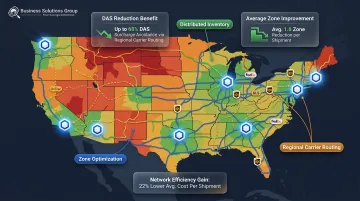
Optimize fulfillment network positioning to reduce DAS exposure. DAS fees are triggered by shipments going to rural or suburban zones — and the definition of those zones expands regularly. Distributing inventory across multiple fulfillment centers, routing orders to the nearest fulfillment location, and using regional carriers for specific geographies all reduce average shipping zones and DAS exposure. Even urban shippers face growing exposure as carriers use GIS mapping to reclassify ZIP codes into higher-cost tiers — making network positioning a proactive cost lever, not just a reactive adjustment.
Plan for seasonal surcharge windows proactively. Peak season fees are tiered by weekly shipment volume and applied during specific carrier-defined windows — not all at once. Adjusting promotion timing, distributing volume across carriers, or pre-negotiating peak fee caps within contract terms can meaningfully reduce exposure before the surcharge window opens.
Conclusion
Reducing parcel spend inefficiencies requires knowing precisely where cost originates and applying the right intervention at the right layer. Some costs live in operational decisions. Others accumulate through management gaps. Some are determined by the structural conditions under which shipping agreements are set.
Effective parcel cost control is continuous. Carriers adjust rates, expand surcharge zones, and introduce new fee categories throughout the year. Businesses that treat spend management as an ongoing discipline, rather than a periodic renegotiation, consistently protect more margin over time.
Business Solutions Group's advisory services are built for this ongoing process. Core capabilities include:
- Pre-negotiation spend baselines and proprietary benchmark analysis
- Continuous invoice auditing to catch recurring overcharges
- Multi-carrier strategy design to reduce structural rate dependency
The work moves clients from reactive cost management to systematic optimization. Most clients realize measurable savings within four to eight weeks of engagement.
Frequently Asked Questions
How do I reduce shipping fees?
The highest-impact levers are right-sizing packaging to avoid DIM weight charges, auditing carrier invoices for billing errors, matching service levels to actual delivery urgency, and entering contract negotiations with real shipping data. Most meaningful savings come from fees that have been accumulating undetected, not from base rate changes alone.
Who is responsible for freight costs when the terms are FOB shipping point?
Under FOB shipping point terms, the buyer assumes responsibility for freight costs and risk of loss once goods leave the seller's facility. From that point forward, the buyer's parcel spend management practices — carrier selection, contract terms, invoice auditing — directly determine what they pay.
What does it mean when it says "parcel data submitted to carrier"?
This status means the shipper's system has transmitted shipment information to the carrier electronically (weight, dimensions, destination), but the carrier hasn't yet physically scanned or picked up the package. Discrepancies between submitted data and actual package specs can trigger additional charges at the point of scan.
What are the most common hidden fees in parcel shipping?
The most frequently encountered hidden fees are dimensional weight charges, delivery area surcharges, fuel surcharges, peak season fees, additional handling charges, address correction fees, and minimum charge floors. These often appear in combination and compound quickly at volume.
How do I know if my carrier is overcharging me?
Key signs include negotiated discounts not reflected on invoices, DIM divisors calculated incorrectly, DAS zone assignments that don't match the shipment destination, and fees applied outside published eligibility windows. Catching these requires a line-by-line invoice comparison against your contract terms — recurring audits are the only reliable method.
What is dimensional weight pricing and how does it affect shipping costs?
Dimensional (DIM) weight pricing means carriers charge based on a package's volume (length × width × height ÷ 139) rather than actual weight, when that calculated figure is higher. A lightweight but bulky package bills as though it weighs significantly more, which makes packaging decisions a direct cost driver.