The base rate is only part of the problem. Accessorial surcharges now account for 20–30% of total shipping costs, and additional handling surcharges alone rose nearly 20% in 2024. Layered on top: missed carrier refunds, unoptimized contract terms, and billing errors that quietly inflate invoices month after month.
This article covers five shipping analytics platforms selected specifically for their cost optimization capabilities — invoice auditing, carrier benchmarking, and contract negotiation support — not just shipment tracking dashboards.
Key Takeaways
- Shipping analytics software surfaces cost drivers that basic tracking tools miss — billing errors, accessorial overcharges, and rate anomalies
- In 2026, cost-focused shippers need invoice auditing and benchmarking, not just visibility dashboards
- The five platforms covered (Sifted, Reveel, Lojistic, Intelligent Audit, and ShipSigma) were selected for spend optimization, not general feature breadth
- Pairing analytics software with expert advisory support produces deeper savings than software alone
- Platform selection should match your shipping volume, carrier mix, and primary goal: spend monitoring, invoice recovery, or contract renegotiation
What Is Shipping Analytics Software — and Why Does It Matter for Cost Optimization?
Shipping analytics software aggregates carrier and shipment data to surface cost drivers, measure delivery performance, and support smarter carrier decisions. This puts it in a different category from shipping management software. Tools that handle label printing and carrier connectivity tell you what happened — analytics software tells you why your costs keep climbing.
The distinction matters because the cost levers are specific:
- Accessorial surcharges applied inconsistently across shipment types
- Dimensional weight miscalculations that inflate billable weight
- Address correction fees triggered by preventable data issues
- Carrier SLA refunds that go unclaimed after missed delivery windows
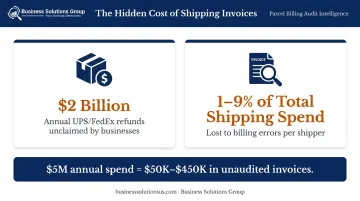
According to Shipware, billing errors can account for 1% to 9% of a total shipping bill. An estimated $2 billion in UPS and FedEx refunds goes unclaimed by businesses annually. For a shipper spending $5 million per year on parcel, that's potentially $50,000–$450,000 sitting in unaudited invoices.
That gap is exactly what the software in this guide targets. The tools below were selected for US-based shippers focused on cost control, carrier benchmarking, and contract optimization — not post-purchase consumer tracking.
Best Shipping Analytics Software for Cost Optimization in 2026
These platforms were evaluated on their ability to reduce shipping costs through spend visibility, invoice auditing, benchmarking, or carrier contract support.
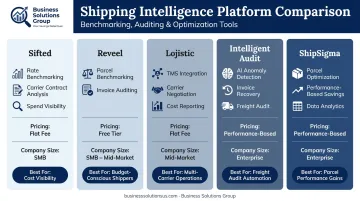
Sifted
Sifted is a continuous spend monitoring platform built for parcel shippers who want always-on visibility into carrier costs. It earned a Leader designation in the G2 Winter 2024 Grid Report for Multicarrier Parcel Management Solutions, with a 4.6/5 rating across 46 reviews.
Its core strength is proactive intelligence: the platform flags spend anomalies before they compound, benchmarks your rates against similar shippers (directly useful for contract renegotiation leverage), and runs automated invoice audits without requiring manual review.
| Key Features | Carrier spend benchmarking, anomaly alerts, parcel invoice auditing, contract renegotiation support, scenario modeling |
| Pricing | Flat platform fee based on shipping volume and product needs; no gain-share model. Custom pricing — confirm with vendor |
| Best For | Teams preparing for carrier contract negotiations or ops leaders who want continuous spend monitoring without manual effort |
Reveel
Reveel uses AI and advanced analytics to uncover hidden parcel costs and surface carrier rate recommendations. It has direct integrations with FedEx and UPS and a clear US market focus.
Its Peer Index benchmarks your shipping health score against similar businesses. That peer comparison data is actionable in contract discussions, where context about what comparable shippers pay matters.
| Key Features | Hidden cost identification, industry benchmark comparisons, carrier rate recommendations, WMS/ERP integration (Premium) |
| Pricing | Essential plan available with free access to tools and dashboards; Premium plan for advanced features including contract strategy support — verify current terms |
| Best For | Small-to-mid-sized parcel shippers looking to identify cost savings without a large upfront investment |
Lojistic
Lojistic is a spend management platform that analyzes historical shipment data to identify spending inefficiencies across multiple carriers and modes — parcel, LTL, FTL, air, ocean, and rail. A free base account with no time limit makes it accessible for shippers starting their cost analysis journey.
The free tier includes ongoing carrier invoice audits, comprehensive reporting, unlimited carriers, and 100 days of data history. Paid add-ons extend data history to five years and unlock audit recovery, contract optimization, and EDI carrier connections.
| Key Features | Historical spend analysis, multi-carrier comparisons, automated invoice management, refund recovery, rate optimization |
| Pricing | Free base account; paid add-ons from $15/month (EDI connections) to results-based or flat-fee structures — verify current terms |
| Best For | Businesses that want to start analyzing shipping costs without a large software commitment |
Intelligent Audit
Founded in 1996, Intelligent Audit is one of the most established freight and parcel auditing platforms available. Its AI engine, DeepDetectAI, scans shipment records for billing anomalies, contract non-compliance, and accessorial overcharges that manual review consistently misses. It holds a 5.0 rating on Gartner Peer Insights in the Freight Audit and Payment Providers category.
Beyond invoice accuracy, it tracks SLA compliance, recovers accessorial overcharges, and generates customizable reporting built for finance and procurement teams managing complex carrier relationships. One published case study documents $1.9M in savings through three-way contractual auditing and accessorial overcharge visibility.
| Key Features | AI-powered invoice auditing (DeepDetectAI), accessorial overcharge recovery, SLA compliance tracking, carrier contract analysis |
| Pricing | Custom; the platform emphasizes a free ROI assessment as the starting point — contact vendor for current pricing structure |
| Best For | Enterprise shippers with high volumes and complex carrier contracts who need full billing accuracy and audit trails |
ShipSigma
ShipSigma combines carrier contract analysis, real-time cost monitoring, and billing error detection in a single cloud-based platform. Its data model is built on over 20 billion parcel and LTL data points — a foundation that supports cost modeling and rate simulations before contract execution.
The platform uses a performance-based model: ShipSigma's free analysis offering carries "guaranteed savings or you don't pay" positioning. It identifies line-item savings opportunities, including service-level optimization (for example, shifting air to ground when delivery time is unaffected).
| Key Features | Carrier contract analysis, billing error alerts, carrier cost recommendations, historical trend analysis, rate simulation |
| Pricing | Performance-based/custom; no-cost, no-obligation analysis available — verify current terms with vendor |
| Best For | Shippers who want both ongoing cost monitoring and support for renegotiating carrier agreements |
Key Features to Look for in Shipping Analytics Software
Not all platforms built around "shipping analytics" are actually useful for cost reduction. These four capabilities separate cost optimization tools from basic visibility dashboards.
Carrier Spend Benchmarking and Anomaly Detection
High-level spend averages don't surface savings opportunities. Cost optimization requires the ability to break spend down by carrier, zone, service level, and shipment type — so that outliers are visible before they compound into significant overcharges. Anomaly detection automates that process, flagging when costs shift unexpectedly without requiring manual review.
Invoice Auditing Capabilities
Carrier invoices regularly include accessorial surcharges, DIM weight adjustments, and address correction fees that are easy to miss at scale. Approximately one in four LTL invoices contains errors — commonly unwarranted reclassification, inaccurate base rates, and accessorial issues. For parcel, billing errors can represent 1–9% of total spend. Automated invoice auditing catches these before payment without relying on a finance team to spot the discrepancies.
Carrier Contract Negotiation Support
The most actionable platforms don't just report data: they benchmark your rates against peer shippers and generate documentation to support better contract terms. Carriers understand your shipping zones, weights, accessorial patterns, and contract history in detail. Shippers who enter negotiations without equivalent data are negotiating blind.
For businesses without dedicated logistics teams, pairing analytics software with an advisory partner like Business Solutions Group — which offers proprietary spend intelligence and no-cost benchmarking — can accelerate contract savings significantly.
Integration with Existing Systems
Analytics software is only as good as the data feeding it. The platform must connect cleanly to existing carrier accounts and core operations systems. Common integration points include:
- Carrier accounts (UPS, FedEx, regional carriers)
- WMS and ERP platforms for order and fulfillment data
- TMS systems for multi-modal visibility
- Finance and AP tools for invoice reconciliation
Gaps in any of these connections create blind spots in both cost analysis and audit coverage.
How We Chose the Best Shipping Analytics Software
These tools were assessed specifically on their ability to reduce shipping costs — not on dashboard design or post-purchase experience.
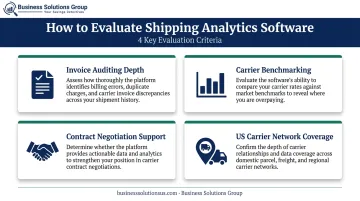
Primary evaluation criteria:
- Invoice auditing depth (automated vs. manual, parcel and freight coverage)
- Carrier benchmarking capability (peer comparisons, not just internal trends)
- Contract negotiation support (documentation, rate modeling, recommendations)
- Coverage of US carrier networks (UPS, FedEx, USPS, regional carriers)
The most common mistake shippers make is choosing a platform based on feature volume or interface aesthetics. The right question is simpler: Will this tool change a specific spending decision? Before signing, confirm the platform can point to concrete, dollar-denominated savings — not just dashboards.
Once the core cost-reduction capability checked out, these secondary factors shaped the final rankings:
- Pricing transparency, with clear tier-based or per-shipment costs for smaller shippers
- Ease of integration with existing carrier accounts
- Support for both parcel and freight shippers
Conclusion
The best shipping analytics software for cost optimization is the one that connects data directly to a spending decision — catching a billing error, benchmarking a carrier rate, or building the documentation for a contract renegotiation. All five platforms covered here do that, with different strengths depending on company size, shipping volume, and carrier complexity.
That said, visibility into spend data is only half the equation. Businesses that pair analytics tools with expert advisory support and professional contract negotiation consistently achieve deeper savings than those relying on software alone.
Business Solutions Group offers a no-obligation benchmark analysis — a one-week review of your parcel invoice history compared against proprietary market rate data — that identifies specific savings potential before any commitment.
Ready to see what your carrier contracts are actually costing you? Contact Business Solutions Group at +1 (949) 525-7677 or visit businesssolutionsus.com to request your free savings analysis.
Frequently Asked Questions
What is the formula for shipping cost?
Shipping cost is generally: base rate + fuel surcharge + accessorial fees (DIM weight adjustments, residential delivery fees, address correction charges, etc.). The exact formula varies by carrier and contract terms. Analytics software makes all these components visible in a single view, so you can see which fees are driving cost increases.
What is shipping analytics software?
Shipping analytics software aggregates carrier and shipment data to surface cost drivers, track delivery performance, and support smarter logistics decisions. It's distinct from shipping execution software (which handles label creation and carrier connectivity) — analytics tools answer why costs are rising, not just what shipped.
How does shipping analytics software reduce costs?
The primary mechanisms include:
- Identifying billing errors and overcharges
- Benchmarking rates against industry peers
- Flagging expensive accessorial fees
- Producing documentation to support carrier contract renegotiations
What is the difference between shipping analytics software and shipping management software?
Shipping management software handles execution — label printing, rate shopping, order routing. Shipping analytics software analyzes performance data to identify why costs are rising and where savings opportunities exist. Many shippers need both, but they serve different functions.
How do I use shipping data to negotiate better carrier contracts?
Effective contract negotiation requires benchmark data showing how your rates compare to similar shippers, historical spend breakdowns by service level and zone, and documentation of carrier SLA performance.
What metrics should shipping analytics software track for cost optimization?
The most important cost-focused KPIs are: cost per package (CPP), accessorial fees as a percentage of total spend, carrier on-time delivery rate (to assess whether premium service levels are justified), and billing error rate.