Manual management simply can't keep pace. Spreadsheets break down at scale, and the cost of getting it wrong — in downtime, compliance failures, or unnecessary capital spending — compounds quickly.
Telecom asset management software solves this by creating a single, live inventory across every layer of the network: physical, virtual, and everything in between. This guide covers what these tools actually do, which asset types they handle, the features that matter most, the measurable benefits, and a practical framework for choosing the right platform.
Key Takeaways
- Telecom asset management software tracks physical, virtual, and facility assets across their full lifecycle — from procurement through decommissioning.
- Predictive maintenance and real-time monitoring are the highest-value features, directly reducing downtime and repair costs.
- AI-enabled operations can reduce network OPEX by 15–30% and cut troubleshooting tickets by up to 70%, per McKinsey research.
- Integration with ERP, OSS, and CRM systems is non-negotiable: isolated asset data defeats the purpose of centralized management.
- Selecting the right platform starts with mapping your asset scope, not comparing vendor feature lists.
What Is Telecom Asset Management Software?
Telecom asset management software is a digital platform for inventorying, monitoring, and maintaining the physical and virtual infrastructure assets that make up a telecom network — tracking each asset from initial procurement and deployment through ongoing maintenance, upgrades, and eventual decommissioning.
The platform maintains a continuously updated record of what assets exist, where they are, what condition they're in, and what's happened to them over time.
Telecom Asset Management vs. Telecom Expense Management
These two disciplines are often confused — and many vendors blur the line — but they solve different problems:
- Telecom asset management focuses on infrastructure: tracking hardware, virtual components, software licenses, and their operational status and lifecycle stages
- Telecom expense management (TEM) focuses on financial management: invoices, contracts, billing reconciliation, and carrier spend
Many organizations deploy both together, and some platforms overlap. The distinction still matters when evaluating vendors: a TEM tool won't tell you whether a router needs maintenance. That clarity becomes especially important as operators scale infrastructure — which is driving significant investment across the category.
A Growing Market
The scale of investment in this space reflects how seriously operators are taking the problem. Two market estimates illustrate the momentum:
- Mordor Intelligence projects the telecom operations management market — the closest verified proxy for this category — to grow from $96.74B in 2026 to $151.67B by 2031 at a 9.41% CAGR
- Grand View Research estimates the next-generation OSS and BSS market at $57.45B in 2023, reaching $132.43B by 2030, with telecom asset management positioned as a key component of that modernization stack
Types of Telecom Assets These Tools Track
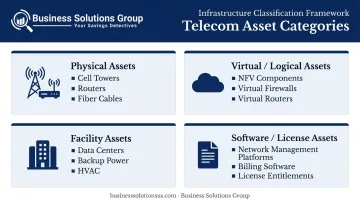
Modern telecom networks are not a single, uniform class of assets. Effective asset management tools must handle a broad mix across four primary categories:
| Asset Category | Examples |
|---|---|
| Physical assets | Cell towers, routers, switches, fiber optic cables, antennas, radio units |
| Virtual/logical assets | Virtual firewalls, virtual routers, NFV components, cloud-native network functions |
| Facility assets | Data centers, backup power systems, HVAC, site enclosures |
| Software/license assets | Network management platforms, billing software, license entitlements |
The Virtual Asset Problem
Physical assets are visible and fixed. Virtual assets are neither. The NFV market alone is forecast to grow from $47.62B in 2026 to $163.27B by 2031, at a 27.95% CAGR. As software-defined networking (SDN) and network functions virtualization (NFV) become standard, virtual resources spin up and retire continuously. Platforms that can't auto-discover these changes will fall behind.
Towers as a Special Category
For TowerCos and mobile network operators, cell towers and macro sites occupy their own tier. These assets require capabilities far beyond a standard inventory record:
- Structural and environmental monitoring
- Regulatory compliance tracking
- Multi-tenant documentation and lease management
Site energy costs add another layer of urgency: base stations consume 80% of mobile network energy, making accurate site asset data essential for any serious cost management effort.
Must-Have Features in Telecom Asset Management Software
Centralized Asset Inventory and Visibility
Every telecom asset management platform starts here. The goal is a single, real-time database that gives operations, finance, and network teams one consistent view of all assets — their location, condition, lifecycle stage, and performance data.
This matters because siloed systems create expensive blind spots. When procurement, operations, and field teams each maintain their own records, duplicate purchases happen, maintenance gets missed, and audit preparation becomes a manual nightmare.
Asset Lifecycle Management
Tracking an asset's current status is table stakes. What distinguishes better platforms is end-to-end lifecycle visibility: from the first procurement event through installation, ongoing maintenance, tenant additions (for TowerCos), upgrades, and eventual decommissioning. This historical record is what makes Capex and Opex planning accurate rather than approximate.
Key lifecycle stages a platform should track:
- Procurement — purchase orders, vendor records, and initial asset registration
- Deployment — installation date, site assignment, and commissioning status
- Maintenance — scheduled and unscheduled work orders, parts replaced
- Upgrades — configuration changes, capacity additions, tenant modifications
- Decommissioning — retirement date, disposal method, and final audit record
Predictive Maintenance and Alerts
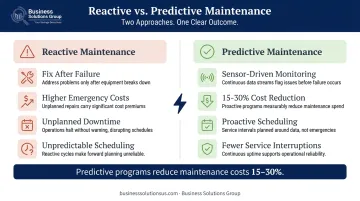
Reactive maintenance — fixing things after they break — is the most expensive way to run a network. Platforms with sensor data and IoT integration can shift teams to a predictive model: monitoring performance trends, generating alerts before failures occur, and scheduling maintenance before problems escalate.
The operational impact is real. In asset-intensive industries, predictive maintenance programs can reduce maintenance costs by 15–30%, though telecom-specific figures vary by network type and implementation quality. One important nuance: poor alert calibration generates false positives that erode team trust in the system, so alert quality matters as much as alert volume.
Audit Trails and Compliance Reporting
Regulatory environments for telecom operators are demanding. An automatic audit trail — electronic records of every asset event from installation to decommissioning — supports license management, contract compliance, and regulatory reporting without manual reconstruction.
This extends to software license ingestion: tracking entitlements, mapping them to contracts, and flagging expiry dates before they become compliance liabilities.
Integration Capabilities
A telecom asset management tool that doesn't connect to the rest of your tech stack creates a new data silo rather than solving the old ones. Look for platforms that integrate via open APIs with:
- ERP systems (SAP, Oracle)
- Operations support systems (OSS)
- CRM and customer management platforms
- Field service management tools
- Supply chain and procurement systems
TM Forum has developed 100+ REST-based Open APIs specifically for telecom systems interoperability, adopted by more than 2,900 organizations globally. Platforms built on these standards integrate faster and more reliably than platforms built on proprietary-first architectures.
Key Benefits of Implementing Telecom Asset Management Software
Reduced Operational Costs
The direct cost levers are clear:
- Eliminate duplicate purchases by knowing exactly what assets exist and where they are
- Optimize maintenance scheduling to prevent costly emergency repairs
- Identify underutilized equipment for redeployment or retirement
- Reduce energy waste through better visibility into site and equipment performance
Network infrastructure costs are substantial. Site rental, electricity, and personnel together represent the majority of network OPEX. Getting more accurate asset data directly improves the quality of decisions across all three.
Improved Network Uptime
Real-time monitoring and predictive alerts let operators address issues before they cascade into outages. According to McKinsey's telecom-specific research, self-healing network operations enabled by AI can make MTTR 30–40% faster and reduce NOC costs by 55–80% — directly translating to higher service availability and lower SLA penalties.
For enterprise context: over 90% of mid-size and large enterprises report hourly downtime costs above $300,000, per ITIC's 2024 survey. For telecom operators, the stakes are even higher given network-scale dependencies.
Enhanced Asset Visibility Across Distributed Networks
Centralized dashboards eliminate the blind spots that plague geographically dispersed networks. Field and operations teams can instantly locate any asset, review its full maintenance history, and assess current condition — without hunting through multiple systems or calling a regional team.
This directly prevents theft, loss, and resource misallocation. For operators managing thousands of sites across regions, that unified view translates directly into fewer lost assets and faster resource decisions.
Stronger Compliance and Audit Readiness
Asset management tools automate the recordkeeping that regulatory compliance demands. Rather than assembling audit documentation manually, teams can generate reports directly from the platform — covering asset ownership, operational status, license validity, and change history.
Audit preparation time drops considerably, and the risk of compliance gaps from manual entry errors or incomplete records shrinks alongside it.
Streamlined Field Operations
Workflow automation is where asset management software delivers measurable workforce productivity gains:
- Automatic work order generation triggered by maintenance alerts
- Technician dispatch based on skill set, location, and availability
- Mobile-accessible asset records so field staff have complete context on-site
- Reduced emergency part orders through better maintenance forecasting
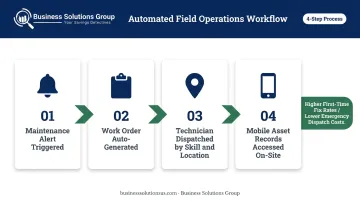
Fewer emergency dispatches, higher first-time fix rates, and less coordination overhead each reduce cost independently — and the effect grows as network scale increases.
How to Choose the Right Telecom Asset Management Software
Define Your Asset Scope First
Before comparing platforms, map what you actually need to manage:
- What asset types are in scope (physical, virtual, facility, software)?
- How many assets, across how many sites or regions?
- Which existing systems must the platform integrate with?
- Which workflows need automation — maintenance, procurement, compliance?
A TowerCo managing 10,000 macro sites across multiple countries has very different requirements than an enterprise managing a private corporate network. Getting this mapping right determines which platforms are worth evaluating.
Evaluate Integration Depth
The ability to connect with existing and future systems is often the most important selection criterion — not features. Ask vendors specifically:
- What API standards do you support (TM Forum Open APIs, REST)?
- How does the platform handle virtual asset auto-discovery?
- What does the integration timeline look like for our existing OSS/ERP?
Cloud-native, modular architectures adapt more easily to new technologies, regulatory changes, and post-merger consolidations. Platforms that require heavy customization to connect with standard systems will slow implementation and increase long-term maintenance overhead.
Assess Scalability and Total Cost of Ownership
License costs are only part of the picture. Factor in:
- Implementation complexity and professional services fees
- Training requirements and internal change management
- Ongoing support quality and vendor responsiveness
- Platform scalability as your asset base and organization grow
Some enterprise-grade platforms carry steep learning curves that erode ROI in the first 18 months. Reference checks with current customers at similar scale are worth the time.
Leverage Advisory Support for Benchmarking and Negotiation
Even after selecting the right platform, organizations often leave significant value on the table in their existing vendor contracts — pricing gaps that software visibility alone won't close.
Business Solutions Group's spend intelligence and advisory services help businesses benchmark their full cost structure, identify contract redundancies, and negotiate better terms with vendors. That advisory layer picks up where operational software leaves off — particularly for enterprises where telecom is a real cost center but not the core business.
How AI and Automation Are Reshaping Telecom Asset Management
AI has moved telecom asset management from reactive problem-solving to continuous, predictive oversight.
Traditional asset management flags problems after they've occurred. AI-enabled platforms analyze sensor data, usage patterns, and performance trends continuously, identifying failure signatures before they impact service. The result is a fundamentally different operating model — one where maintenance is scheduled around predicted failures, not incidents.
AI-Driven Operational Value
McKinsey's telecom-specific research quantifies the impact clearly: AI-driven operational use cases can:
- Reduce total network OPEX by 15–30%
- Cut troubleshooting tickets by 30–70%
- Reduce NOC costs by 55–80%
- Improve MTTR by 30–40%
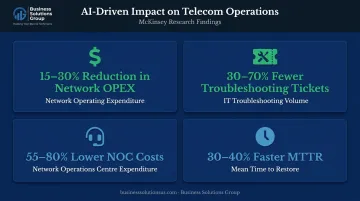
These figures reflect network operations broadly, not just asset management software. But they illustrate what becomes possible when AI is embedded in the operational workflow.
Automation for Virtual Asset Tracking
As networks become increasingly software-defined, manual asset tracking becomes impossible. Virtual resources — VNFs, cloud-native network functions, and containerized services — spin up and retire in minutes. Keeping an accurate inventory without automation is simply not feasible at that pace.
Modern platforms address this through:
- Autonomous asset discovery that detects and registers new virtual resources in real time
- Automated lifecycle tracking from deployment through decommission
- Policy-driven maintenance scheduling tied to usage thresholds and performance signals
The agentic AI market in telecom and network management is projected to reach $8.74B by 2031 at a 13.55% CAGR. When evaluating platforms, prioritize those with built-in autonomous discovery and adaptive scheduling — these capabilities will only become more critical as network virtualization accelerates.
Frequently Asked Questions
What are the 5 P's of asset management?
The 5 P's — People, Process, Policy, Platform, and Performance — are a practical internal checklist for building a complete asset management capability. This framework is informal; ISO 55000 and the Institute of Asset Management use different terminology centered on value, alignment, leadership, and assurance.
What is the difference between telecom asset management and telecom expense management?
Telecom asset management tracks infrastructure — hardware, virtual components, and software licenses — through their full lifecycle. Telecom expense management (TEM) handles financial control: invoices, billing reconciliation, and carrier spend. Most organizations run both in tandem.
How does telecom asset management software help reduce costs?
It reduces costs by eliminating duplicate purchases, identifying underutilized equipment for redeployment or retirement, enabling predictive maintenance to avoid emergency repairs, and automating manual coordination tasks that consume significant staff time.
What types of assets does telecom asset management software track?
Modern platforms track physical assets (towers, routers, cables), virtual assets (NFV components, virtual switches), facility assets (data centers, power systems), software licenses, and all associated documentation and contracts.
How does AI improve telecom asset management?
AI enables predictive maintenance through continuous analysis of sensor and performance data, automates asset discovery for dynamic virtual environments, optimizes technician dispatch, and generates deeper analytics for lifecycle and capacity planning.
What should you look for when selecting telecom asset management software?
Prioritize platforms that offer:
- Centralized real-time inventory and end-to-end lifecycle management
- Open API integration with existing systems
- Virtual and containerized asset support
- Predictive maintenance capabilities
- Strong audit and compliance tools
- Proven deployment experience at telecom scale