What's striking is how much of that spending goes unexamined. Telecom costs don't usually appear as one large, visible line item. They accumulate quietly—subscriptions stacked on subscriptions, outdated plans never adjusted, billing errors nobody catches because nobody's looking. By the time a budget review forces attention to telecom spend, months or years of overpayment have already compounded.
The core problem isn't that communication services are inherently expensive. It's that telecom costs are driven by decisions, habits, and the absence of oversight. This guide walks through how those costs build up, what drives them, and—most practically—what to do about it, organized by where you actually have control.
Key Takeaways
- Telecom costs accumulate gradually through unused services, billing errors, and contracts left on autopilot
- The biggest drivers are vendor fragmentation, over-provisioned plans, and unmonitored mobile usage
- A telecom audit is the required first step—no other strategy works without visibility into current spend
- Lasting savings come from combining smarter procurement, ongoing management discipline, and structural changes
- Benchmarked carrier negotiations consistently unlock the largest savings for businesses willing to do the work
How Telecom Costs Typically Build Up
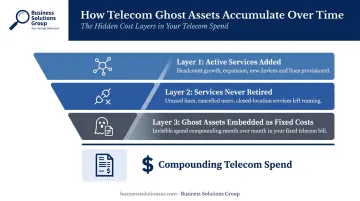
Telecom expenses rarely arrive as a single, obvious charge. They accumulate in layers: monthly subscriptions, per-line fees, usage overages, and add-on services that were provisioned at some point and never removed. Most organizations don't see the full picture until someone actually audits the invoices.
Two dynamics drive this buildup:
- Gradual accumulation — New lines and services get added month over month, each one small enough to pass without scrutiny
- Episodic additions — Headcount changes, office expansions, and new device deployments add services without retiring old ones
The result is a telecom environment that grows consistently but shrinks rarely. Because finance teams typically pay multi-line invoices as a single lump sum, line-level waste goes unnoticed — and unchallenged.
Over time, these environments fill with what practitioners call "ghost assets" — lines, plans, and services still generating monthly charges for users or locations that no longer exist. The longer the environment goes unreviewed, the deeper these charges embed themselves into the baseline — treated as fixed costs rather than recoverable waste.
Key Cost Drivers for Telecom Expenses
Understanding where telecom costs originate makes it much easier to target reductions.
Network Infrastructure and Legacy Hardware
On-premises PBX systems, physical cabling, switches, and telephony hardware carry two cost layers: the initial capital expenditure and the ongoing burden of maintenance, upgrades, and support staff. Organizations running legacy infrastructure often pay a premium simply to keep older systems operational rather than modernizing. A Forrester projected Total Economic Impact study for Microsoft Teams Phone Mobile modeled the retirement of up to 40% of redundant on-premises phone lines as part of a cloud migration—illustrating the overhead that legacy systems can carry.
Multi-Vendor Fragmentation
When separate providers handle voice, mobile, data, and internet, cost control becomes difficult. Each vendor has its own pricing structure, billing cycle, and contract terms. There's no leverage for bundled rates, cost comparisons become inconsistent, and disputes require navigating multiple support channels. The more fragmented the vendor landscape, the harder it is to get a clear picture of total spend—let alone optimize it.
Mobile and Data Usage
Enterprise mobile spending is growing fast. Verizon's business wireless revenue hit $3.3 billion in Q3 2022, up 5.7% year-over-year—and the broader BYOD and enterprise mobility market is estimated at $72.7 billion in 2024.
For businesses with remote or field-based workers, unmonitored data consumption and international roaming charges can add up quickly and often go unreviewed in aggregate until after billing cycles close.
Vendor Lock-In and Auto-Renewing Contracts
Long-term carrier agreements signed two or three contract cycles ago frequently lock organizations into rates that no longer reflect current market pricing. Without a system to track expiration dates, contracts auto-renew at existing terms—and most businesses simply pay without revisiting the rates.
Compliance-Driven Service Requirements
Industries subject to HIPAA, GDPR, or specific data retention mandates may require certified providers, call recording, or enhanced security tiers. These costs are real and often necessary—but they're frequently lumped into general telecom spend rather than tracked separately, making them harder to review or reduce.
Cost-Reduction Strategies for Telecom
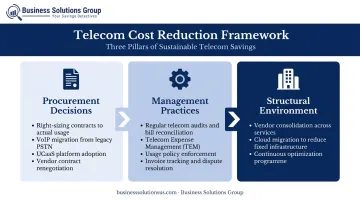
Telecom cost reduction works best when approached in three layers: the decisions made at procurement and contract signing, the management practices applied while services are active, and the structural factors that shape the overall cost environment. Each layer targets different types of waste.
Strategies That Change Purchasing Decisions
Right-size service tiers before contracting. A common source of waste is procuring bandwidth, mobile plans, or voice capacity at enterprise scale "just in case." Basing procurement on actual usage data—rather than estimated peaks—typically reveals that most users can be served by lower-cost tiers without any service impact. Pull 90 days of usage history before renewing or expanding any plan.
Switch from legacy landlines to VoIP or SIP trunking. Replacing traditional PSTN-based phone systems with VoIP or SIP trunking eliminates per-minute toll charges, reduces hardware dependency, and shifts costs to a flat-rate or usage-based model that scales far more efficiently.
Research by Nemertes (cited by Bandwidth) found that nearly 45% of roughly 600 organizations reduced PSTN access spend after adopting SIP trunking, with an average reduction of 16.1%—though results vary based on prior spend levels and implementation.
Adopt Unified Communications as a Service (UCaaS). Maintaining separate platforms for voice, video, messaging, and collaboration multiplies vendor fees and licensing costs unnecessarily. UCaaS consolidates these tools into a single subscription, eliminating redundant licenses and simplifying administration. Forrester's commissioned TEI studies for major UCaaS platforms consistently model substantial cost savings through consolidation, though actual results depend on the complexity of the environment being replaced.
Establish a BYOD policy. Allowing employees to use personal devices for work—with clearly defined security and usage guidelines—can reduce company spending on device procurement, mobile plan provisioning, and device management overhead, particularly for businesses with distributed or remote workforces.
Strategies That Change How Telecom Is Managed
Conduct a comprehensive telecom audit. Before any other cost-reduction effort can be prioritized effectively, you need a clear picture of what you're actually paying for. A proper audit means:
- Gathering 12–24 months of telecom invoices
- Mapping every active service, line, device, and contract
- Identifying unused lines, redundant services, billing errors, and unauthorized charges
This step is non-negotiable. Cutting costs without an audit risks eliminating the wrong services while leaving the real waste in place.
Implement formal Telecom Expense Management (TEM). TEM is a structured, ongoing practice for tracking telecom invoices, inventory, contracts, and usage patterns. Without it, overpayments accumulate year after year, largely undetected. TEM can be managed in-house or with a specialist provider—but the discipline itself is what drives sustained savings, not just the software.
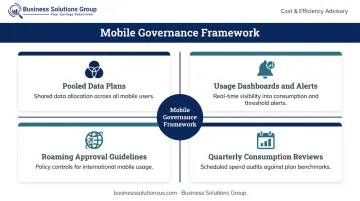
Govern mobile and data usage with real policies. Usage policies only work when they're enforceable. Practical mechanisms include:
- Pooled data plans that absorb individual overages across the organization
- Usage dashboards and threshold alerts visible to managers
- Written roaming guidelines with automatic approval required for international travel
- Quarterly reviews of data consumption by department or role
Track contract dates and audit invoices proactively. Many businesses overpay simply because no one flags billing discrepancies or upcoming auto-renewals. A basic contract calendar—flagging review dates at least six months before expiration—and a process for auditing invoices against contracted rates before payment can prevent significant ongoing waste.
Strategies That Change the Structural Environment
Consolidate vendors and bundle services. Reducing the number of telecom providers—consolidating voice, mobile, data, and internet under fewer vendors—creates negotiating leverage, simplifies billing oversight, and often unlocks bundled pricing that's cheaper than the sum of separate contracts. Fewer vendors also means fewer renewal calendars to track and fewer invoice formats to audit.
Renegotiate carrier contracts using benchmarked data. The most effective contract negotiations are built on evidence: actual market rate comparisons, competitive quotes from alternative providers, and timing that gives you leverage. Entering a renegotiation without benchmark data means accepting whatever the carrier proposes. Advisory partners like Business Solutions Group bring carrier benchmarking and spend intelligence to these conversations, allowing clients to negotiate from documented market knowledge rather than intuition. The engagement process typically begins with a benchmarking analysis that establishes what clients are paying versus what they should be paying—providing a factual foundation before any negotiation begins.
Migrate from on-premises infrastructure to cloud communications. Legacy PBX and telephony hardware require ongoing capital investment for maintenance, upgrades, and technical support staff. Cloud-based communication platforms eliminate much of that overhead, improve scalability, and reduce the cost of provisioning changes (adds, moves, and disconnects) from IT-intensive projects to administrative tasks.
Build a continuous optimization framework. One-time cost reduction initiatives degrade. Usage grows, new services get added, and without regular review, the savings erode. A sustainable framework includes:
- Scheduled quarterly usage reviews
- Annual contract assessments timed to renewal windows
- Automated invoice anomaly alerts
- Periodic re-benchmarking against current market rates
Organizations that embed these reviews into standard operations—rather than treating them as one-off projects—consistently sustain lower telecom spend over time.
Conclusion
Telecom cost reduction comes down to diagnosing where spend actually originates—in purchasing decisions, management gaps, or structural dependencies—and addressing it at the right layer. Trimming services is rarely the answer.
The businesses that achieve the most durable results treat telecom optimization as a continuous practice rather than a one-time project. Spend visibility, benchmarked negotiation, and ongoing governance together produce sustained savings. Any one of those elements alone tends to produce temporary improvements that erode within 12–18 months.
The audit is the right starting point—it surfaces the specific cost drivers that determine which strategies will move the needle for your organization. From there, the work becomes systematic rather than reactive.
Frequently Asked Questions
Is a telephone bill a telecommunication expense?
Yes. Telephone bills—including mobile, landline, and VoIP service charges—are classified as telecommunication expenses on a company's books. Telecom expenses also encompass internet services, data plans, equipment fees, and network connectivity charges beyond phone service alone.
What is telecom expense management (TEM)?
TEM is a structured business practice for tracking, auditing, and optimizing all telecom-related costs across services, contracts, and inventory. It can be managed internally or through a specialized provider—consistent execution is what drives results, regardless of which approach a business chooses.
What are the most common telecom billing errors businesses miss?
The most frequently overlooked issues include charges for cancelled lines that were never disconnected in the system, incorrect rate application (being billed at non-contracted rates), duplicate fees, and unauthorized service additions.
What is the first step a business should take to reduce telecom costs?
A comprehensive telecom audit. Without a clear picture of current spend, services, and usage, any cost-reduction effort risks cutting the wrong things or missing the largest sources of waste. The audit creates the baseline everything else builds from.
How much can businesses typically save by actively managing telecom expenses?
Savings depend on how long the telecom environment has gone unmanaged and which strategies are applied. Removing unused lines and right-sizing plans typically yields 10–25% of affected spend, with contract renegotiation and vendor consolidation adding further reductions on top.
Should a business hire a telecom consultant or manage costs in-house?
Both approaches work. In-house management suits teams with the bandwidth and expertise to audit invoices and benchmark rates consistently. External advisors bring specialized carrier data and ongoing accountability—most useful when telecom isn't a core focus and internal discipline tends to lapse.