Introduction
If your LTL costs keep rising despite flat or declining shipment volumes, you're not imagining it. Major carriers pushed through general rate increases of 4.9% to 6.9% for the 2025–2026 cycle, and the TD Cowen/AFS LTL rate-per-pound index reached an all-time high of 65.1% above its January 2018 baseline during Q3 2025 — even as manufacturing demand stayed soft.
The July 2025 NMFC density-based reclassification added another layer of exposure, overhauling pricing for more than 2,000 item numbers and catching shippers with outdated freight class assumptions off guard with unexpected charges and rebills.
The shippers navigating this environment effectively aren't just picking better carriers. They're using better tools — TMS platforms, freight audit software, real-time visibility networks, and advisory frameworks that turn raw shipment data into negotiating leverage.
That's what this guide is built around: what LTL freight optimization tools and services actually are, which platforms and service models are worth evaluating in 2026, and how to match the right solution to your operation's volume, complexity, and cost structure.
Key Takeaways
- LTL GRIs of 4.9%–6.9% and density-based NMFC reclassification make optimization tools a financial necessity, not a nice-to-have
- Key tool categories: TMS platforms, freight audit and payment software, real-time visibility networks, and managed 3PL/4PL services
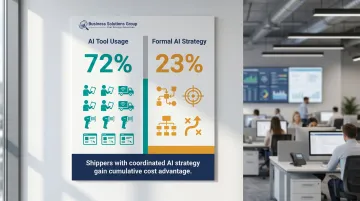
- 72% of logistics employees adopted AI tools in 2024, yet only 23% of organizations have a formal AI strategy — a gap shippers can exploit now
- No single platform wins across all categories — match tools to your specific pain points: cost, visibility, or invoice accuracy
- Benchmark analysis surfaces savings that carrier-provided data alone won't reveal
Overview of LTL Freight Optimization in the U.S. Market
LTL freight optimization means reducing the cost, transit time, and operational complexity of less-than-truckload shipments through technology, data, and strategic carrier management. Finding the lowest quote is only one piece of it. The full cost equation includes accessorials, freight classification, invoice accuracy, and carrier performance tracked over time.
The U.S. LTL market is currently valued at approximately $114 billion and projected to reach $139.6 billion by 2030 (Research and Markets), growing at roughly 4.1% annually. That scale, combined with sustained carrier pricing discipline, means even modest improvements in rate management or audit accuracy translate to material savings.
The NMFC Reclassification Factor
The July 19, 2025 implementation of NMFTA Docket 2025-1 shifted over 2,000 NMFC item numbers from commodity-based to density-based classification, replacing the previous 11-tier system with a revised 13-subprovision density scale. Additional changes followed via Docket 2026-1 in February 2026.
For shippers, the practical risk is immediate:
- Outdated TMS classification data triggers unexpected freight charges
- Misclassifications create carrier disputes and shipment delays
- Reclassification fees erode margins on lanes that appeared profitable
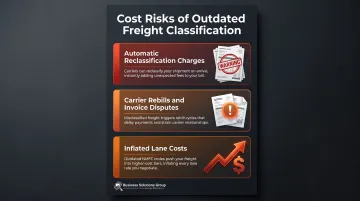
Accurate dimensioning and real-time classification tools have become a baseline requirement for protecting margins on every lane.
Top LTL Freight Optimization Tools & Services for 2026
These tools were evaluated on three dimensions: measurable cost reduction, operational visibility, and scalability across varying shipment volumes and lane structures. Each entry below reflects what the platform actually does well — and where it falls short.
Uber Freight TMS (Formerly MercuryGate)
MercuryGate was acquired by Uber Freight in August 2024 and now operates as the Uber Freight TMS — a cloud-based, modular platform spanning transportation, warehouse, and order management. At its Deliver 2025 event, Uber Freight showcased AI-driven features across planning, execution, and real-time pricing, with Uber Freight's own capacity network integrated directly into the TMS environment.
| Category | Details |
|---|---|
| Key Features | Multi-carrier LTL rating, automated BOL generation, real-time shipment tracking, ERP/WMS integration, AI-assisted planning and execution, reporting dashboards |
| Best For | Mid-to-enterprise shippers managing multi-carrier LTL programs who need a single platform for rating, booking, and visibility — particularly those who can benefit from Uber Freight's integrated capacity and pricing |
| Integration & Pricing | API connectivity to ERP, WMS, and supply chain systems; enterprise SaaS licensing model |
Cass Information Systems
Cass is a publicly traded freight audit, payment, and business intelligence platform processing approximately $37 billion in annual freight spend across 35 million invoices and 15,000+ carriers. Its Cass Freight Index has served as an industry-standard measure of freight volume and expenditure since 1995.
Beyond invoice processing, Cass offers analytics through CassPort dashboards, Ratemaker rating services, and Amplify (a carrier working capital solution) — giving procurement teams visibility into overcharges, accessorial inflation, and carrier performance gaps.
| Category | Details |
|---|---|
| Key Features | Freight audit and payment processing, spend analytics (CassPort), carrier scorecarding, Ratemaker rating, freight claims portal, AP system integration |
| Best For | Mid-to-large shippers with high invoice volume ($40M–$2B+ freight spend), multiple carrier relationships, and a need for bank-level financial controls on freight payments |
| Integration & Pricing | Integrates with client AP and TMS systems; operates as an outsourced enterprise engagement |
project44
project44's Movement platform connects more than 240,000 carriers globally via API, telematics, or mobile app, providing real-time LTL tracking, predictive ETAs, and exception alerts. Its Autopilot AI agents automate carrier outreach and exception resolution — cutting the manual check-call load that consumes operations teams daily.
That operational lift matters because the exposure is significant: a Flock Freight study found the average LTL on-time delivery rate sits at 82%, and OTIF failures cost the average enterprise shipper $6.1 million annually. Catching exceptions early — before they escalate into chargebacks or customer penalties — converts that exposure into recoverable margin.
| Category | Details |
|---|---|
| Key Features | Real-time LTL/FTL/VLTL tracking, AI-powered predictive ETAs, exception management and alerting, direct LTL booking within Movement, API-first carrier connectivity |
| Best For | Shippers with complex multi-carrier LTL programs and high customer delivery expectations — particularly those where OTIF failures carry financial penalties |
| Integration & Pricing | API-first integration approach; enterprise SaaS pricing model |
Freightos
Freightos is a global freight marketplace that digitizes freight forwarder rates, enabling comparison across 75+ providers with instant quoting and booking. Enterprise customers include PUMA and United Cargo.
Important clarification: Freightos's core capabilities are oriented toward international freight — ocean and air — not domestic U.S. LTL rate shopping. Shippers seeking domestic LTL rate comparison should look at purpose-built platforms such as Uber Freight TMS, Echo Global, or Freightquote by C.H. Robinson instead.
| Category | Details |
|---|---|
| Key Features | Instant rate comparison across 75+ providers, transparent rate display, booking and tracking, WebCargo enterprise procurement and tendering |
| Best For | International shippers comparing ocean and air freight rates; businesses with cross-border supply chains who need digital rate access without manual forwarder calls |
| Integration & Pricing | Free for shippers to compare quotes; enterprise (WebCargo) pricing separate; carrier-side fees apply |
Echo Global Logistics
Echo is a technology-enabled 3PL, now privately held by The Jordan Company, offering both a digital freight platform and managed LTL services. With access to 120+ top-volume LTL carriers and $700M+ in LTL buying power, Echo provides shippers with negotiated pricing and multi-carrier management — including temperature-controlled, volume, expedited, and cross-border LTL.
Its technology stack includes EchoShip (shipper portal), EchoSync (API integrations), EchoTrak (visibility), and EchoInsure+ (freight protection). For growing businesses that need carrier management without the overhead of an in-house freight team, that combination of platform and service is a practical middle ground.
| Category | Details |
|---|---|
| Key Features | 120+ LTL carrier access, EchoShip portal, EchoTrak visibility, EchoSync API integrations, managed carrier selection and reporting, freight protection |
| Best For | Growing businesses with increasing LTL spend that need professional carrier management without building an in-house freight team |
| Integration & Pricing | EchoSync API integration available; margin-based freight brokerage model with transactional and contracted arrangements |
How We Chose the Best LTL Freight Optimization Tools
Tools in this guide were assessed across five dimensions:
- Cost impact — does the platform actually reduce total LTL spend, not just show lower rates on a screen?
- Carrier network depth — breadth of connected carriers and quality of contracted pricing access
- Integration capability — how cleanly it connects to existing ERP, WMS, and AP environments
- Classification and audit support — especially critical post-NMFC reclassification
- Scalability — whether the platform serves both growing mid-market shippers and enterprise operations
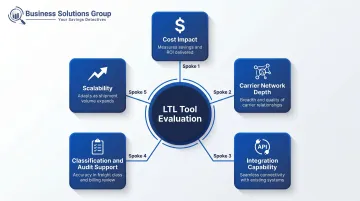
The most common mistake shippers make is evaluating tools on features rather than total cost impact. A platform with a polished dashboard that doesn't reduce invoice errors or surface overcharges delivers cosmetic value, not financial value.
No single tool wins across every category. Shippers with high invoice volume need audit-first platforms like Cass. Those managing complex multi-carrier execution need a TMS, while businesses without internal freight expertise tend to get the most from managed service models.
Selecting the right tool is only part of the equation — the underlying data quality and benchmarking process determine whether any tool delivers real returns. Business Solutions Group applies this same framework when assessing LTL spend for clients: 6–12 months of shipment-level data are pulled, current rates are benchmarked against market intelligence, and scenarios are modeled before any carrier or tool decisions are made. That process typically surfaces 10–30% in actionable savings that carrier-provided reporting alone won't reveal.
Key 2026 LTL Market Trends Shaping Optimization Strategy
Rate Environment: Contract Pricing Matters More Than Ever
The 4.9%–6.9% GRI range for 2026 reflects carriers maintaining pricing floors despite soft demand; the LTL rate-per-pound index posted eight consecutive quarters of year-over-year growth through Q3 2025. Contract renewal increases ranged from 1.6% to 5%, significantly below tariff rates, which means shippers without negotiated contracts are absorbing the full GRI impact.
Locking in contract pricing and using benchmark data to validate rate competitiveness has a direct dollar value — and that value grows as spot rate exposure increases. Classification accuracy is the next place that shows up on the invoice.
NMFC Reclassification: Classification Accuracy Is Now a Cost-Control Tool
The July 2025 overhaul raised the cost of classification errors significantly. Shippers still using commodity-based assumptions for items now priced by density face:
- Automatic reclassification charges on delivery
- Carrier rebills that trigger invoice disputes
- Inflated freight costs on lanes that should be cheaper under density pricing
Accurate dimensioning data and TMS platforms updated to reflect Docket 2025-1 and Docket 2026-1 changes are now essential, not optional.
AI Adoption: Speed Advantage for Early Movers
According to MHI and Deloitte's 2025 industry report, 28% of supply chain organizations currently use AI, with 54% expecting adoption within five years. AI is already being deployed for dynamic LTL pricing (Averitt's ExactRate generates customized rates in real time using historical lane data), predictive ETAs, and proactive accessorial detection before booking.
Tool adoption has outpaced strategy: 72% of logistics employees use AI tools, but only 23% of organizations have a formal plan for integrating them. Shippers who coordinate AI capabilities across rating, visibility, and audit functions gain a cumulative cost advantage over those using AI features in isolation.
Conclusion
LTL freight optimization in 2026 is a data and systems problem. The shippers controlling costs have accurate classification data, real-time visibility into exceptions, systematic invoice audit processes, and contract rates benchmarked against current market intelligence. The right combination of tools depends on your volume, lane complexity, and internal capabilities — no single platform covers all of it.
Start with an honest audit of your current process. Three questions worth answering:
- Do you have full visibility into total landed freight costs, including accessorials and reclassification charges?
- Do your carrier contracts reflect what comparable shippers are actually paying today?
- Does your tech stack support the classification accuracy the post-2025 NMFC environment requires?
Business Solutions Group helps freight shippers answer those questions with a no-cost, no-commitment benchmark analysis — capturing shipment data, comparing it against market intelligence, and identifying where costs are leaking. Engagements deliver 15%–35% in LTL cost reduction, with all pricing negotiated directly in the client's name (not a broker model) and no line item on your P&L. Reach the team at +1 949-525-7677 to start the assessment.
Frequently Asked Questions
What is the LTL forecast for 2026?
LTL tonnage is projected to remain slightly negative year-over-year in H1 2026 before recovering in H2, with major carriers maintaining mid-single-digit GRIs of 4.9%–6.9%. Carriers are sustaining pricing discipline despite soft demand, meaning rate floors are holding regardless of volume trends.
What tools do companies use to optimize LTL freight costs?
Most shippers rely on a combination of tools:
- Transportation Management Systems (TMS) for carrier rating and load planning
- Freight audit platforms for invoice accuracy and overcharge recovery
- Real-time visibility tools for exception management
- Digital rate comparison platforms for multi-carrier quoting
How does a TMS help with LTL freight optimization?
A TMS centralizes carrier rate access and automates shipment booking, BOL generation, and status tracking. It also produces analytics that reveal cost-per-lane trends, reducing manual effort and sharpening carrier selection decisions across multiple LTL carriers.
What is the difference between LTL freight audit software and a TMS?
A TMS manages shipment execution — rating, booking, and tracking. Freight audit software focuses on verifying carrier invoices against contracted rates and recovering billing errors after delivery. Both address different stages of the LTL cost equation and are frequently used together.
How can I reduce LTL accessorial charges in 2026?
Provide accurate shipment dimensions and freight class upfront, flag delivery location types (residential, limited access) before booking, and audit invoices against contracted accessorial rates systematically. AI-powered tools now detect likely accessorial charges before booking — catching them proactively is cheaper than disputing them after.
When should I use a 3PL for LTL optimization instead of managing freight in-house?
A managed 3PL or 4PL service makes sense when your business lacks the volume to negotiate competitive carrier contracts independently, when multi-carrier management creates administrative complexity, or when freight spend is growing faster than your team's capacity to optimize it.